

Latest Weather Blog
Flying into the storm, inside the world of America's hurricane hunters
BATON ROUGE — Each hurricane season, two specialized teams from the U.S. Air Force and the National Oceanic and Atmospheric Administration (NOAA) intentionally fly into hurricanes. It’s far from a thrill-seeking stunt, but rather a vital scientific operation, collecting data critical to accurately forecasting tropical cyclones. With the data, forecast accuracy improves by about 10 to 20 percent, according to National Hurricane Center Director Dr. Michael Brennan.
“The aircraft are really the most valuable direct measurements we have because they can fly right to where the storms are,” Brennan said.
The United States is the only country to fly routine hurricane reconnaissance missions.
The Air Force flies the WC-130J, a military cargo plane fitted with weather instruments. Lt. Col. Jeremy DeHart, an aerial reconnaissance officer who has been flying into storms for 10 years, said the plane is not specially built for hurricane flying.
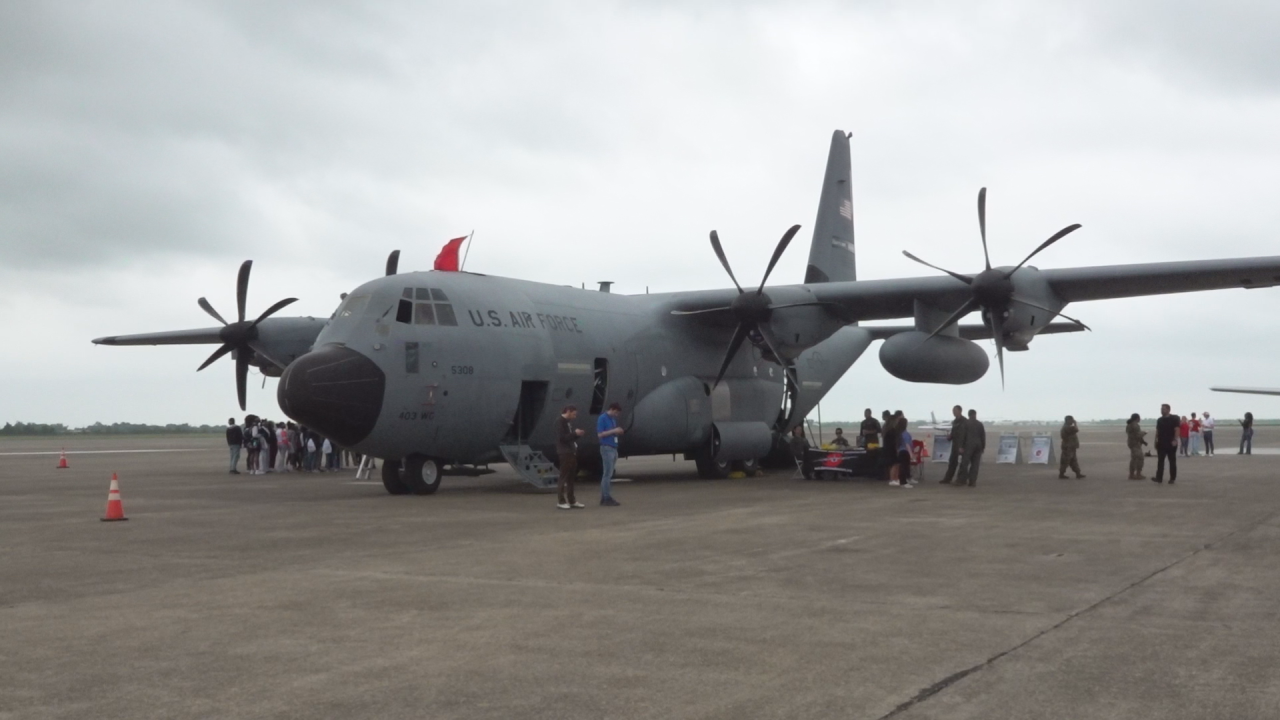
U.S. Air Force WC-130J Aircraft
"It's not specially outfitted to fly into hurricanes or anything like that," DeHart said. "It's just these things are like tanks, like tanks in the sky."
Trending News
The plane continuously collects wind speed, wind direction, pressure, temperature, and moisture data from inside the storm. That information is packaged and sent via satellite to the National Hurricane Center to improve forecast models and support watches and warnings.
One of the key tools on board is the dropsonde, a small instrument released from the bottom of the aircraft. DeHart described how it works.
"It's basically a backwards weather balloon," DeHart said. "So all the way down to the sea surface, and they're gathering the same data in the vertical as we're gathering horizontally at flight level."
The Air Force unit focuses primarily on locating the center of the storm and sampling the storm environment, flying what is called an alpha pattern, essentially repeated large X’s through the storm. While NOAA has the same capabilities as the Air Force, it focuses more on the research side of the mission.
NOAA flies a different aircraft, the P-3 Orion. Flight Director and Meteorologist Joyce Hirai walked the Storm Station through the features on the aircraft, including its tail doppler radar.
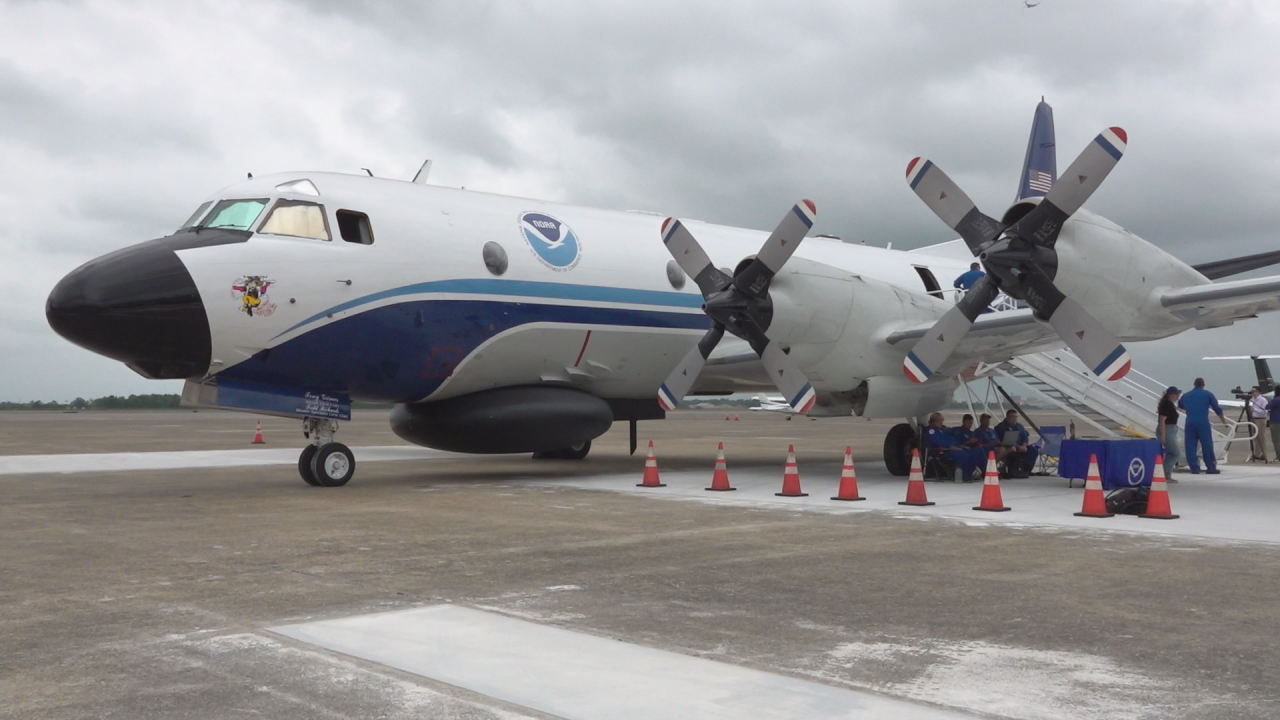
NOAA WP-3D Orion Aircraft, "Miss Piggy"
"The tail Doppler radar is more like a 3D scan or an MRI scan that gives a 3D scope of the hurricane as every time we pass through it," Hirai said.
That data recently became operational, meaning the National Hurricane Center can now use it in real time for official forecasts.
NOAA also flies Gulfstream IV-SP aircraft, retrofitted with its own tail Doppler radars to capture the high-altitude environment and conditions around the storm.
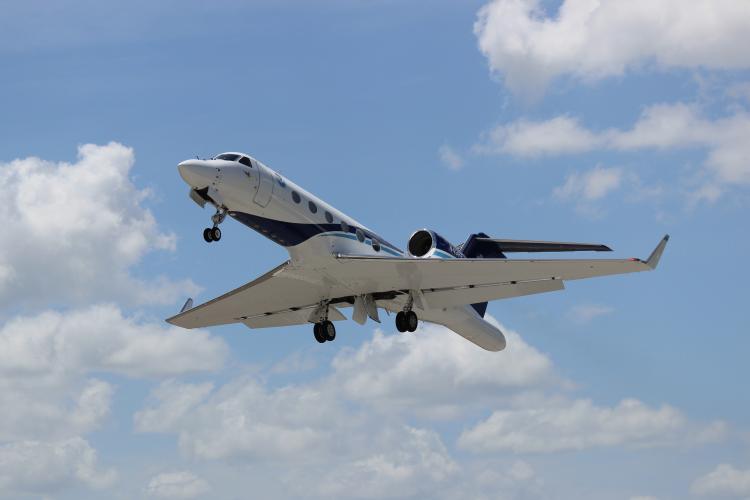
NOAA Gulfstream IV-SP Aircraft
More recently, NOAA has been experimenting with launching unmanned drones into the storm, gathering direct measurements closer to sea level. For the first time this hurricane season, data from these drones will be input into computer model simulations.
Flying into hurricanes can be intense. As DeHart puts it, the hours-long missions are usually "90% boredom and 10% terror." He described the 2018 landfall mission of Hurricane Michael as his roughest ride.
"We lost about 2,000 feet of altitude in the eyewall in the last pass," DeHart said. "Stall warnings were going off in the airplane. So all the nightmarish things that we think of were happening."
He also recalled flying a landfall mission during Hurricane Harvey, when the crew received mayday calls from ships near Corpus Christi and relayed them to the Coast Guard while flying up and down the coastline.
The Storm Station is here for you, on every platform. Your weather updates can be found on News 2, wbrz.com, and the WBRZ WX App on your Apple or Android device. Follow WBRZ Weather on Facebook and X for even more weather updates while you are on the go.
More News

