

Latest Weather Blog
Four astronauts are heading toward the Moon this week for the first time in decades
Related Story
For the first time in more than 50 years, NASA has launched humans back toward the Moon. Following the success of the unmanned Artemis I flight in 2022, the Artemis II mission marks a historic leap forward in an effort to pave the way for mankind to return to the Moon while also preparing for an eventual Mars landing. WATCH the Live Mission Coverage below:
Space Launch System (SLS) Program Manager John Honeycutt and Chief Engineer Dr. John Blevins describe the mission as “a practice run that will set the stage for future Artemis missions – humans once again landing on the lunar surface, exploring areas the Apollo astronauts did not, staying longer, learning more, and making new discoveries. It is the next step to establishing our presence on a strategically important piece of solar system real estate.”
The mission serves as a critical stress test of the Orion spacecraft’s life support system and will confirm that the ship can sustain a crew on future missions. The astronauts will practice operations essential to the success of Artemis III and beyond.
The mission will take place aboard the Orion spacecraft, launched by the SLS rocket that will generate more than 8.8 million pounds of thrust at liftoff.
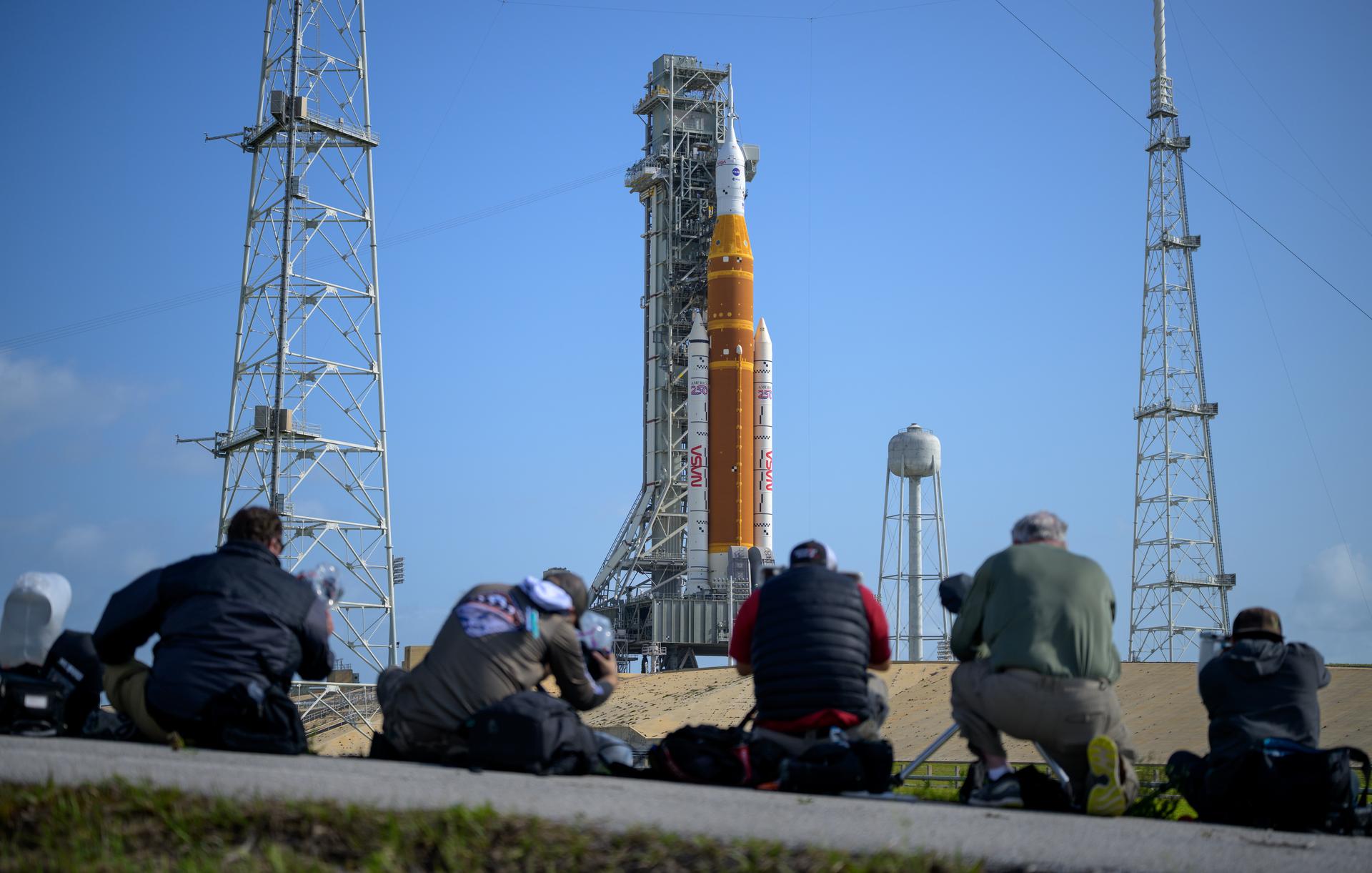
The crew features a team of veteran astronauts who will become the first to see the side of the Moon opposite Earth since the Apollo era. Three Americans, Commander Reid Wiseman, Pilot Victor Glover, and Mission Specialist Christina Koch, and one Canadian, Mission Specialist Jeremy Hansen, will board the flight.
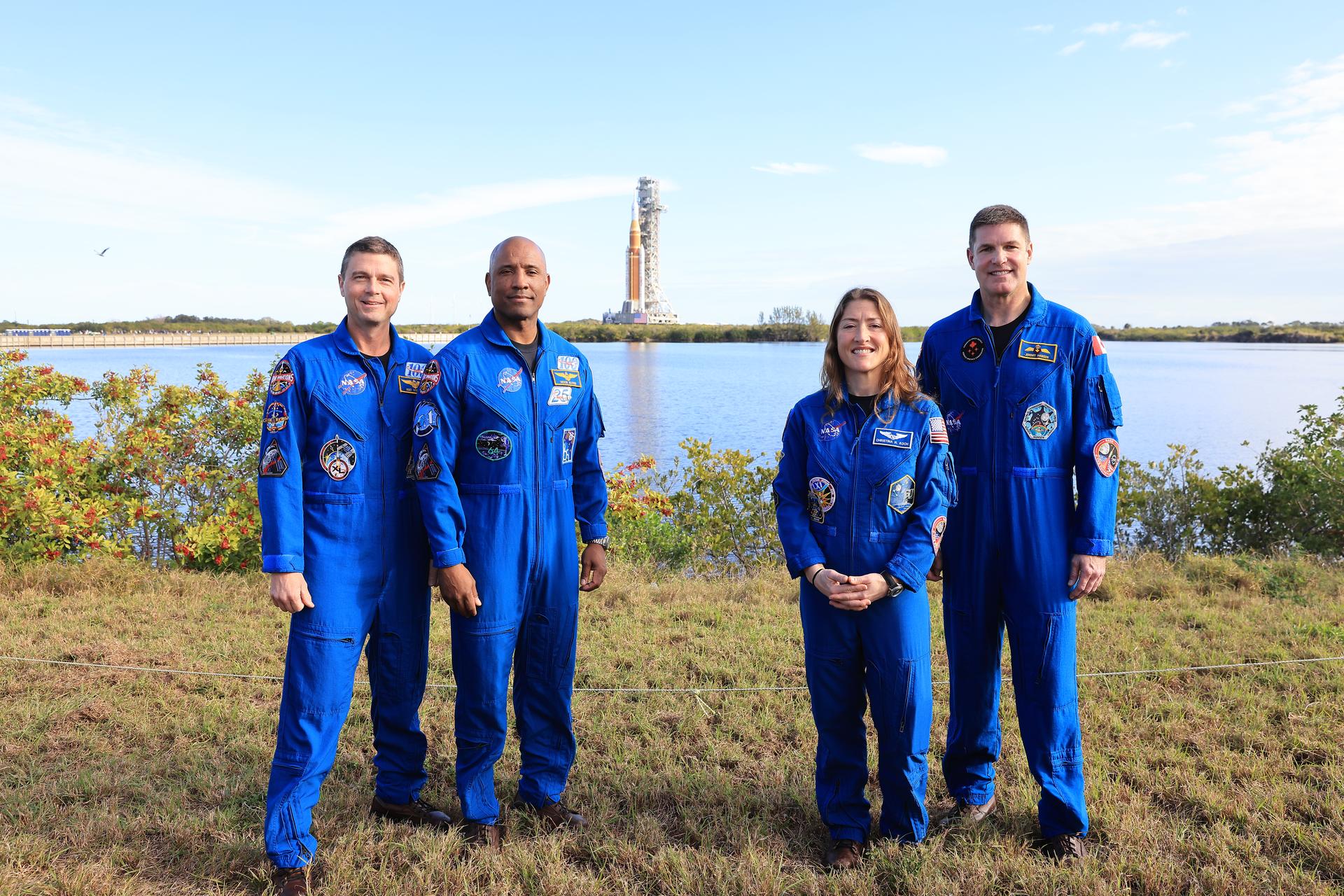
From left to right, Artemis II NASA astronauts Reid Wiseman, commander; Victor Glover, pilot; Christina Koch, mission specialist; and CSA (Canadian Space Agency) Jeremy Hansen
Weather played a critical role in launch operations. NASA has established strict weather guidelines to safely roll the rocket out to the pad and launch the rocket. Such criteria are very specific and consider temperature, precipitation, wind, solar activity, cloud type, lightning, and proximity to nearby thunderstorms.
The Artemis II mission launched at 5:35 p.m. on Wednesday, April 1. The launch window spanned two hours, beginning at 5:24 p.m. local time (6:24 p.m. EDT). Should the launch have been scrubbed, there were five other two-hour launch windows from April 2-6, and another on April 30.
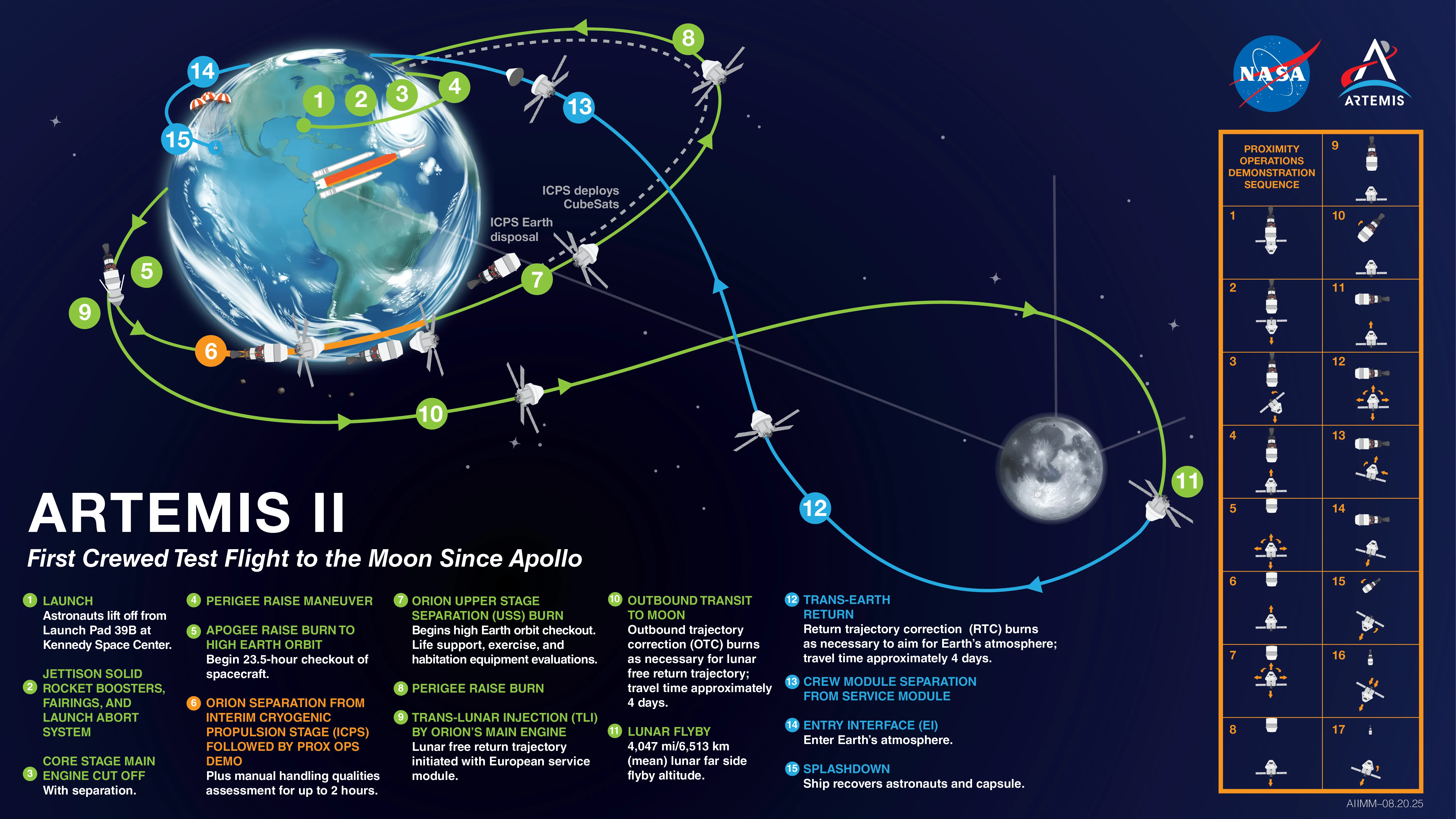
Before launching to the Moon, the crew will orbit Earth twice to ensure systems are functioning properly in a deep space environment, while still close to home. During that time, the crew will take manual control of Orion to test the human skill of maneuvering the spacecraft. This will be essential in future missions in order to dock with the lunar lander in orbit.
The next phase of the mission involves Orion propelling toward the Moon, during which the crew will evaluate the spacecraft’s systems, practice emergency procedures, and take part in science experiments. Eventually, the Moon’s gravity will catch Orion and take the ship around the far side of the Moon, where the crew will lose communication with Earth for about 30 to 50 minutes. From their vantage point, the Moon will appear around the size of a basketball held at arm’s length at that time.
The Moon will then “slingshot” Orion back around toward Earth for the final leg of the journey. Upon re-entry and splashdown in the Pacific Ocean, the spacecraft and crew will be recovered with the help of the U.S. Navy.
The Storm Station is here for you, on every platform. Your weather updates can be found on News 2, wbrz.com, and the WBRZ WX App on your Apple or Android device. Follow WBRZ Weather on Facebook and X for even more weather updates while you are on the go.
News

